
The Girl who Ignited the Fires of Salem.
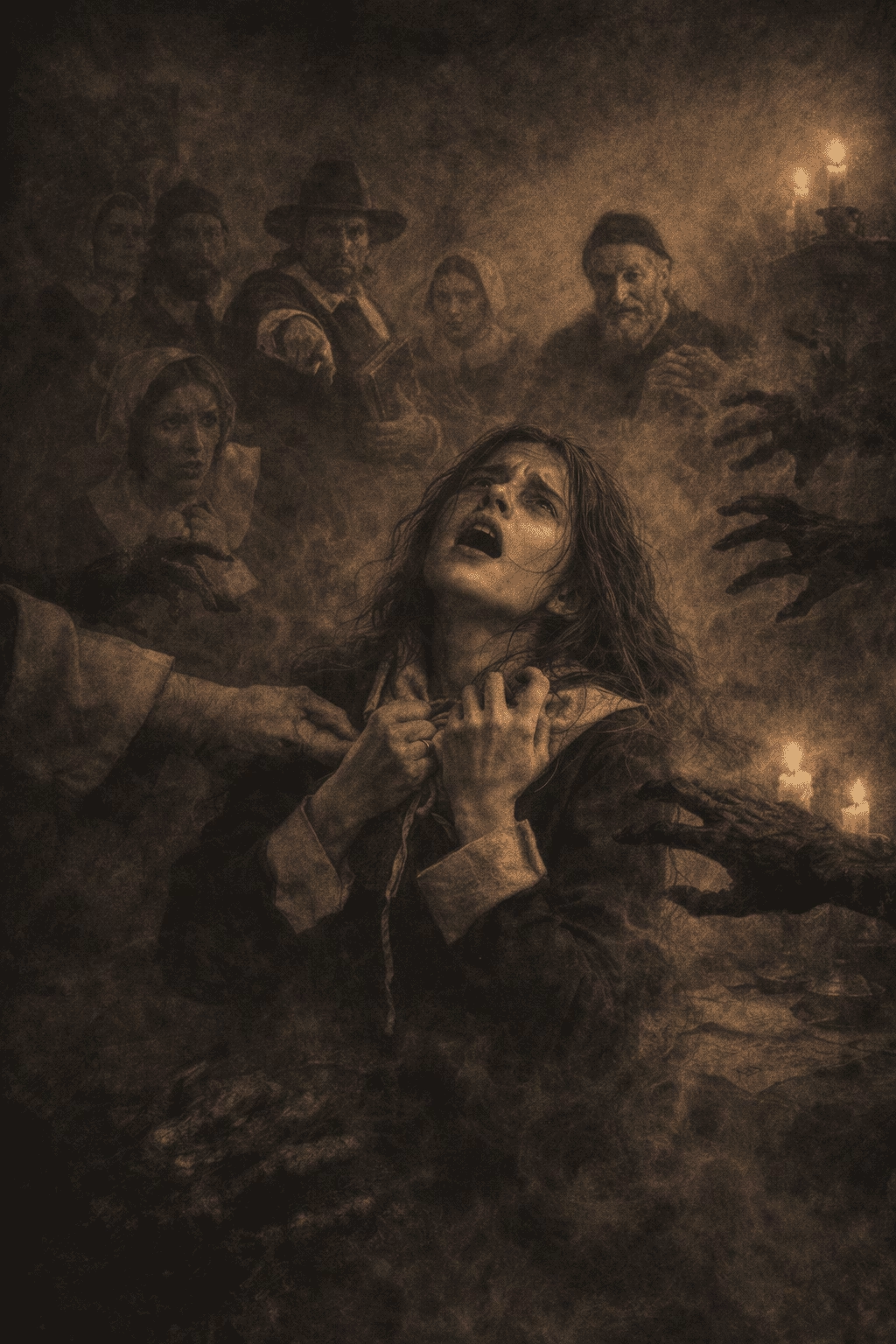
History often remembers monsters as shadows without faces. But sometimes the darkness has a name… Abigail Williams was not a witch, a sorceress or a supernatural force. She was a young girl and yet her accusations would unleash one of the most infamous episodes of mass hysteria in Western history: the Salem witch trials.
Her story is one of fear, power, manipulation and the fragile psychology of a society on the edge. Abigail Williams stands as a chilling reminder of how easily innocence can become a weapon and how quickly truth collapses under pressure.
Who was Abigail Williams?
Abigail Williams lived in Massachusetts in Salem Village at the late 17th century. She was a relative of Reverend Samuel Parris, one of the most influential and controversial figures in the Salem Trials.
We don’t know a lot about her early life. What left are court records and testimonies shaped more by fear rather than clarity. But those testimonies are enough to mark her as a central spark in the tragedy that followed.
The Outbreak of Hysteria.
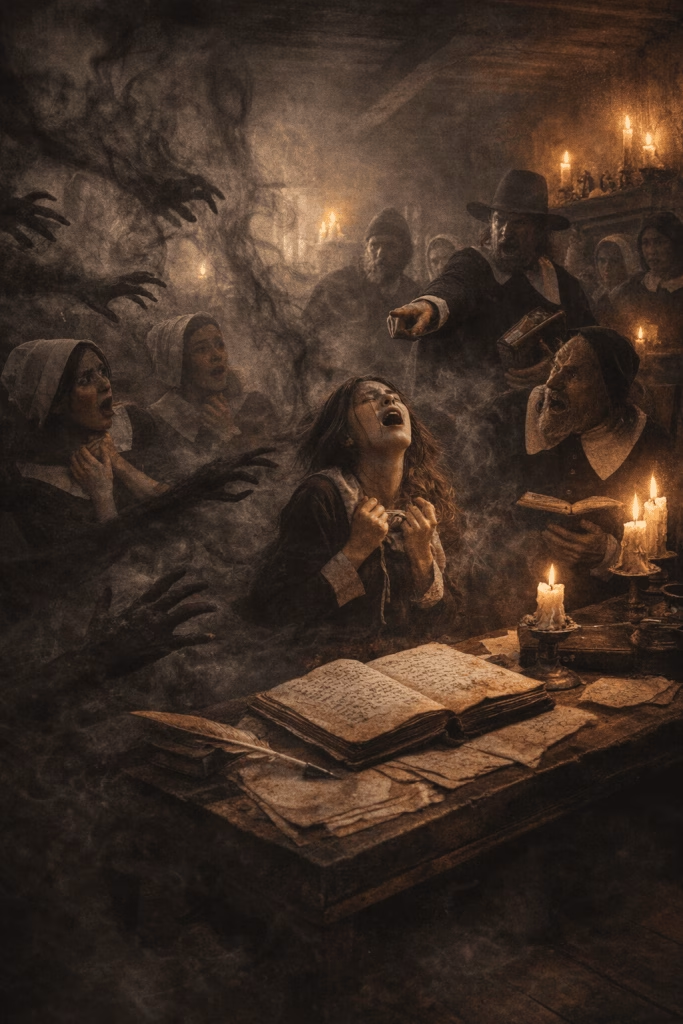
The hysteria that culminated in the Salem Witch Trials began in January 1692, when two young girls, Betty Parris and Abigail Williams, began exhibiting strange and inexplicable symptoms, including fits, convulsions, and hallucinations. Fearing that they were under the influence of witchcraft, local physicians were unable to provide a medical explanation for their symptoms, fueling rumors and speculation within the community.
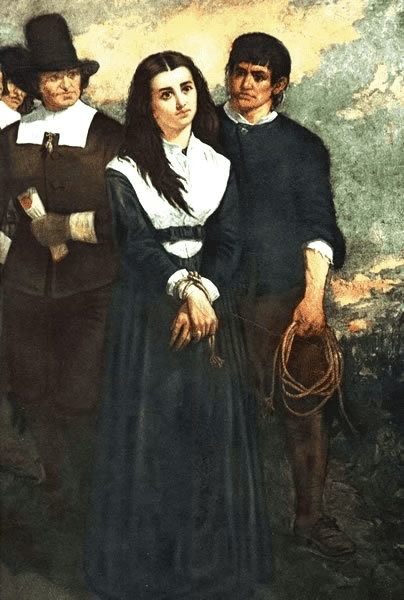
As the hysteria spread, more young girls began to exhibit similar symptoms, accusing various members of the community of bewitching them. Those accused of witchcraft were often outcasts or individuals who deviated from societal norms, including unmarried women, widows, and individuals of low social standing. In 1692 Salem was a community steeped in religious rigidity, social tension and existential dread. Illness, political instability and Puritan paranoia created a perfect environment for suspicion.
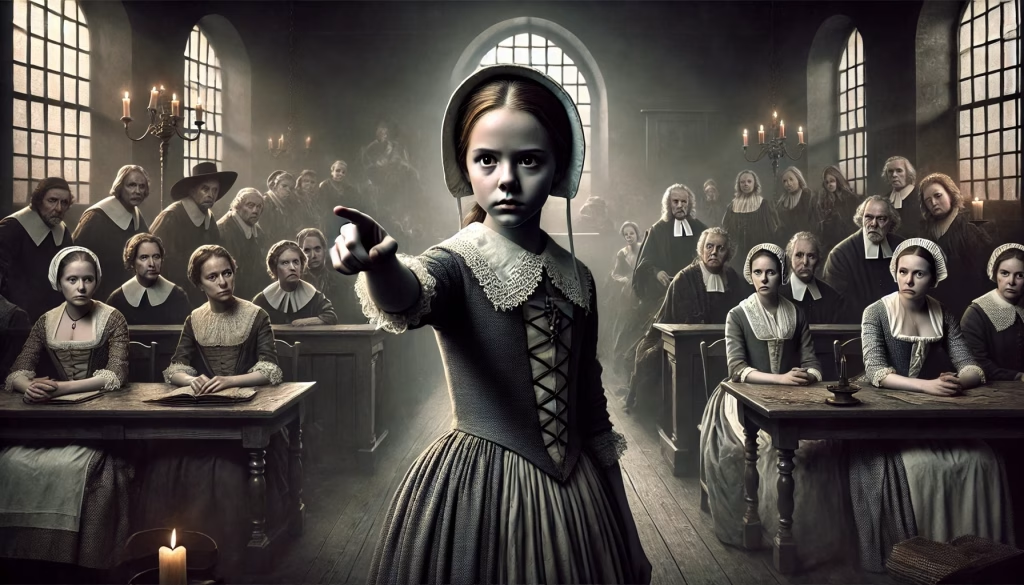
Strange behavior and unexplained fits appeared among several young girls and Abigail Williams became one of the first and most vocal accusers.
She claimed to see:
Spectral figures, Dark apparitions and Invisible forces tormenting her body.
Her words carried devastating weight.
In a society that believed the Devil moved freely among them, accusation was evidence.
Power, Fear and Moral Ambiguity
The real question was if Abigail Williams was lying or manipulating, or even if she was a victim of psychological pressure and religious terror.
The truth still remains disturbingly unclear.
Possible interpretations of her actions include:
- A desperate attempt to gain control in a world where young girls had none.
- A reaction to strict Puritan authority and abuse.
- Psychological distress expressed through culturally accepted narratives of possession.
What makes Abigail Williams so unsettling is not certainty, but ambiguity. She exists in the gray space between victim and instigator.
The Human cost of Accusation
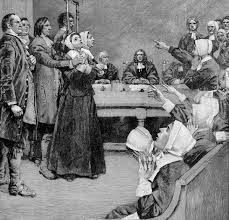
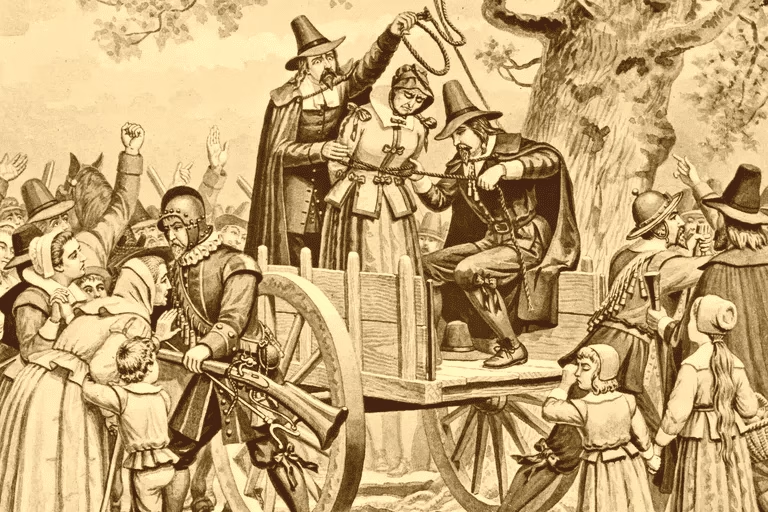
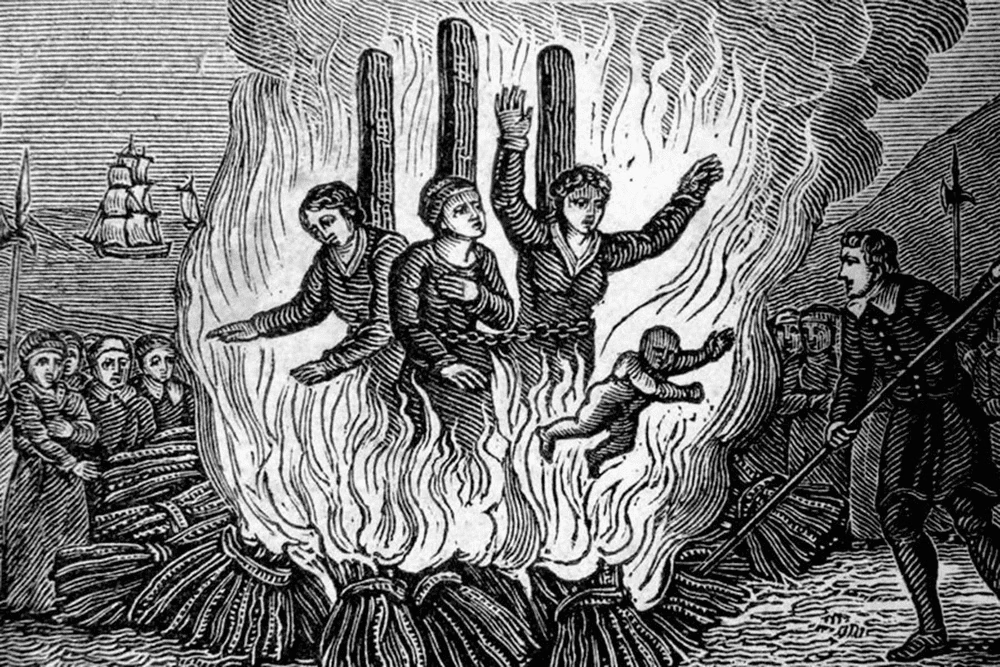
As accusations spread, innocent people were imprisoned, tortured and executed. The machinery of fear required no proof beyond testimony. And Abigail’s voice helped fuel that machine.
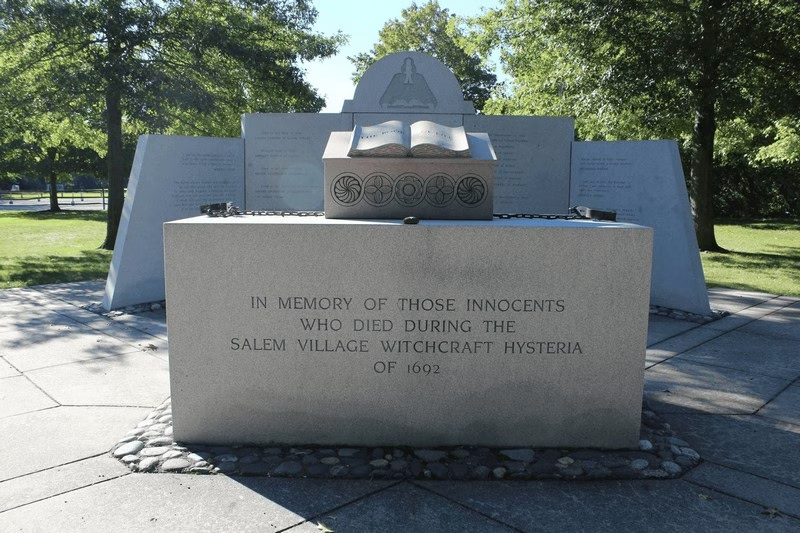
By the end of the trials 20 people were executed, dozens were imprisoned and Salem’s moral authority lay in ruins.
Abigail Williams, however, vanished from the historical record but her name still remains. She left behind no diary or confession, but only the echo of accusations that once carried the weight of death.
There was no execution, no trial, no confession… Only silence…
Today, Abigail Williams represents more than a historical figure. She has become a symbol of:
- Mass hysteria
- The danger of unchecked belief
- The psychological consequences of repression
- How far can turn communities against themselves
Her name lingers not because of what she was, but because of what she revealed about
Human Nature.
Dark Academia Reflections: Knowledge without Mercy
From a dark academia perspective, Abigail Williams embodies a haunting truth: Knowledge and belief are not inherently virtuous. When combined with fear and authority they become instruments of destruction.
The Salem witch trials remind us that:
- Intellectual certainty can be as dangerous as ignorance
- Morality collapses when fear becomes law
- History’s darkest moments are often born from ordinary people
“In an era of misinformation, moral panic and social polarization, the story of Abigail Williams feels unsettlingly modern.“
Her legacy warns us:
- To question narratives shaped by fear
- To resist the seduction of moral absolutism
- To remember that innocence does not equal harmlessness
Abigail Williams reminds us that evil does not always arrive with fangs and flames but sometimes it wears the face of a child. And that is what makes her truly terrifying.